

Here is how to make magic sand at home: mix 5 parts play sand, 3 parts cornstarch (or heat-treated flour) and 1 part food-grade oil until no dry or oily spots remain. That makes soft, moldable sand, similar to store-bought kinetic sand, that holds its shape when squeezed. It takes about five minutes and uses pantry items. It is not the water-repelling sand from science demos; for that, see the hydrophobic magic sand recipe.
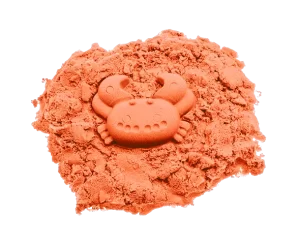
What You Need: The 5-3-1 Ratio
This kinetic sand recipe uses one scoop or cup for every “part”, so the ratio stays right at any batch size.
| Batch | Sand (5) | Cornstarch or flour (3) | Oil (1) |
|---|---|---|---|
| Small (½-cup scoop) | 2½ cups | 1½ cups | ½ cup |
| Double | 5 cups | 3 cups | 1 cup |
Choosing the sand
Use clean, dry, fine play sand from a craft or home-improvement store. Craft sand in colors gives you colored batches without dye. Coarse, damp or dirty sand makes a gritty, clumpy mix.
Cornstarch or flour, and which oil
Cornstarch gives the silkiest feel and needs no preparation. Plain flour works as a swap, but raw flour can carry bacteria such as E. coli, so heat-treat it first: spread it on a baking sheet and bake at 350°F (175°C) for about 5 minutes, or microwave it in 30-second bursts, stirring between each. Either way, it should reach at least 160°F (71°C) on a food thermometer. Let it cool before mixing. If in doubt, use cornstarch.
For the oil, use a food-grade oil such as vegetable, canola or sunflower oil, since little hands end up near mouths. Skip baby oil and other mineral oils for young children: if swallowed and inhaled into the lungs, they can cause serious lung injury. Food oils slowly go rancid, so keep the batch sealed and replace it when it smells off.
How to Make It: 4 Steps
- Pour the sand into a wide bowl or tray.
- Stir in the cornstarch or cooled, heat-treated flour until the mix looks uniform.
- Add the oil and knead with your hands or a sturdy spoon.
- Keep mixing until there are no dry or oily spots. Squeeze a handful: it should hold together, then crumble softly when poked.
Adults should mix, and an adult should supervise play. This is a play material, not food, and it should not be eaten or go in mouths. It is not suitable for children under 3 or for any child who still mouths objects. Wash hands after play.
Fixing a Bad Batch
| Problem | Likely cause | Fix |
|---|---|---|
| Crumbly, won’t clump | Too little oil or binder | Add oil a teaspoon at a time and knead in fully |
| Greasy, leaves oil on hands | Too much oil | Knead in cornstarch a spoonful at a time |
| Holds no shape | Under-mixed, or too much sand | Knead longer, then add small amounts of cornstarch and oil in equal steps |
If a batch that used to work has gone stiff, use these methods to revive dried-out sand.
No Cornstarch, No Oil, No Sand? Ingredient Swaps
Without cornstarch
Use heat-treated flour in the same 3-part amount (see the heat-treating steps above). No glue is needed.
Without oil: cornstarch, water and dish soap
Water replaces the oil in this version. Start with 4 cups sand, 2 cups cornstarch, ¼ cup water and ½ teaspoon dish soap. Stir the sand and cornstarch together, mix the soap into the water, then add the liquid a spoonful at a time, kneading between additions. Stop when a squeezed handful holds its shape. If it stays crumbly, add up to another ¼ cup of water, a spoonful at a time.
Expect a different result from the oil version. It feels softer and wetter, dries out faster and crusts, so mist it lightly with water to refresh it. Because it is damp, it can grow mold, so use it within a few days.
Without sand
Heat-treated flour and food-grade oil alone make a soft, crumbly dough often called cloud dough. It is a different material and does not behave like sand.
How Long Does Homemade Magic Sand Last?
Kept in an airtight lidded bin, away from moisture and heat, an oil-based batch typically stays usable for several weeks. A water-based batch lasts only a few days.
These things shorten its life:
- The oil going rancid
- Damp air, spills or a lid left off
- Warm rooms or direct sun
- Food crumbs, saliva or dirty hands getting into the bin
- Dust and grit from sharing the bin with other play materials
Throw it out if it smells off, turns rancid or shows any mold. If it merely stiffens, the tips for storing kinetic sand help keep the next batch soft.
Play Ideas to Get Started
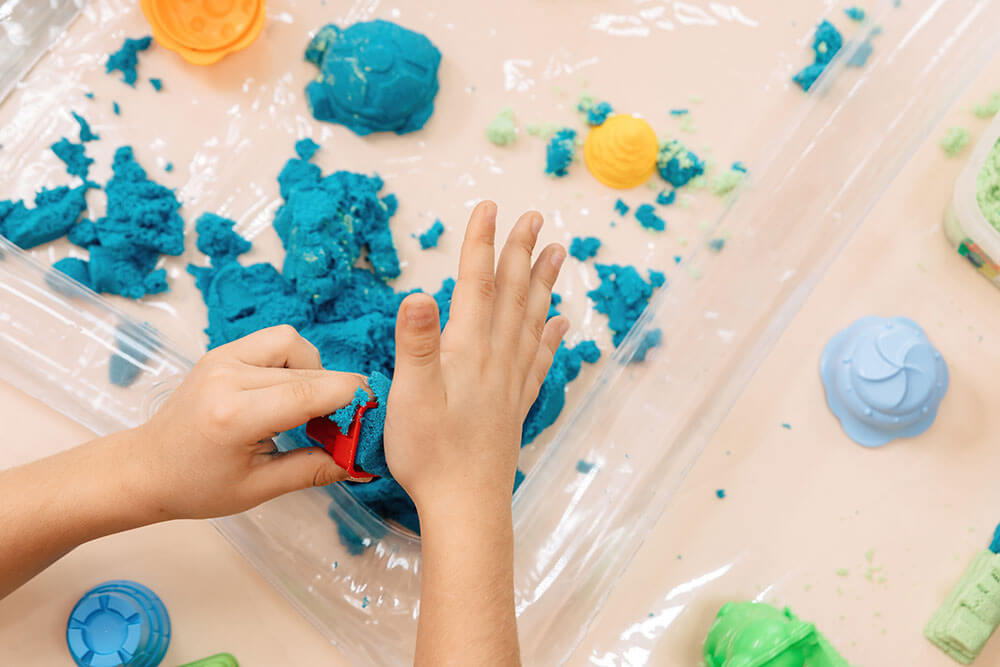
Set out cookie cutters, spoons, a butter knife, cups, a rolling pin and small toys, then try:
- Sandcastles: Pack the sand into cups and tip them out to build towers, then add flags made from toothpicks or paper.
- Fossil dig: Bury small plastic animals or toy dinosaurs and let kids dig them out with spoons.
- Cut and press: Roll the sand flat with the rolling pin, then stamp shapes with cookie cutters or slice it with the butter knife.
- Handprints and footprints: Press a hand or a toy’s feet into a flattened tray of sand and compare the impressions.
- Letters and shapes: Smooth the surface and trace letters, numbers or shapes with a finger.
For more, browse creative DIY projects using sensory sand or magic sand art ideas.
Homemade vs. Real Magic Sand: When to Buy Instead
A pantry mix is cheap and quick, but it has limits. IBIZA magic sand is a different product from this recipe: it is glass-bead based, moldable and designed not to dry out.
| Homemade (5-3-1) | IBIZA magic sand | |
|---|---|---|
| Cost | Cheaper; a batch costs only a few pantry items | Costs more than a pantry batch, because it is a manufactured product |
| Mess | Oily or dusty residue, and grit on hands and surfaces | Designed not to stick to hands |
| Drying | Can crust and dry out, and can spoil | Made not to dry out |
| Reusability | Reusable until it spoils, gets contaminated or crusts | Made to stay moldable for repeated play |
Neither one repels water. For the science behind that, read the chemistry of hydrophobic sand, the science behind kinetic sand, or try the underwater science project, which pairs well with sparking kids’ curiosity about science.
Molds and tools come in the Magic Sand Kit. If you are sourcing ready-made sand for a classroom or program, contact us.
FAQ
-
What are the ingredients in magic sand?
The homemade version uses play sand, cornstarch (or heat-treated flour) and a food-grade oil in a 5-3-1 ratio. Commercial moldable magic sand is a separate, engineered product. IBIZA's is glass-bead based rather than made from sand, starch and oil, so the pantry recipe only imitates its moldable feel. Water-repellent magic sand is different again: ordinary sand with a hydrophobic coating.
-
How do you make kinetic sand with 3 ingredients?
Combine 5 parts sand, 3 parts cornstarch and 1 part food-grade oil using the same scoop for each. Mix the sand and cornstarch first, add the oil, then knead until no dry or oily spots remain. Squeeze a handful to check that it holds its shape.
-
Can I make kinetic sand with regular sand?
Yes, if the sand is clean, dry and fine, such as play sand from a craft or hardware store. Coarse, damp or dirty sand gives a gritty, clumpy result that won't mold well. Colored craft sand works too and adds color without dye.
-
How long will homemade kinetic sand last?
An oil-based batch typically lasts several weeks in an airtight bin kept dry and cool. Water-based batches last only days. Discard any batch that smells off, turns rancid or grows mold. Mere stiffness can often be fixed by kneading in a little oil.
-
Is homemade kinetic sand toxic?
The ingredients are ordinary pantry items, but the mix is not food and should not be eaten. Use cornstarch or heat-treated flour (raw flour can carry E. coli) and a food-grade oil rather than baby oil. Supervise children, keep it away from under-3s, watch for flour or wheat allergies, and keep sand away from mouths because of choking and ingestion risk. For store-bought sand, read whether kinetic sand is safe.