

The short version of the blue magic sand pros and cons: it is very good for calm, tactile, low-mess tabletop play. It is not a sandbox replacement, it is not edible, and it is not for children under 3 or unsupervised young children. The points below are based on moldable glass-bead sand such as our own blue magic sand; other brands use different formulas, so check each product.
Quick Verdict: Pros and Cons at a Glance
| Pros | Limits | Matters most to | |
|---|---|---|---|
| Feel | Holds shape, flows, doesn’t stick to hands | Still sheds loose grains | Home and classroom users |
| Drying | Formulated not to dry out | Collects hair, crumbs and dirt | Anyone storing it between sessions |
| Use | Calm, focused hands-on play | Tabletop material only, not sandbox volume | Parents, teachers, therapists |
| Color | Blue suits ocean, sky and water scenes | Mixes with other colors and can’t be separated afterward | Buyers of multi-color sets |
| Safety | China 3C certified; tested to EN71 and ASTM | Not edible, supervision needed for young children | Schools and distributors |
Best for: indoor sensory play, themed builds and bulk buyers who want one consistent color. Skip it if you want outdoor digging or a scented or edible material.
Advantages of Blue Magic Sand
Holds shape and flows without drying out
Blue magic sand packs into molds and still flows through your fingers. Our magic sand is formulated not to dry out, though sealed storage still keeps it clean. The reason lies in what is in magic sand: a binder coats the grains instead of water, so there is no moisture to evaporate.
Clean, tactile play for focus and calm
The material doesn’t stick to hands, so children can squeeze, cut and mold without the clean-up drama of wet sand or dough. That makes it popular for fine-motor practice and winding down. Therapists also use sensory sand in sessions, and occupational therapists use magic sand with children with autism and ADHD for tactile, calming work.
Blue suits themed play
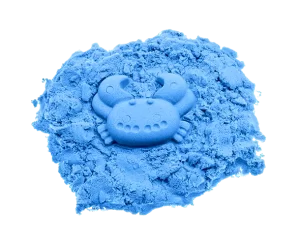
Blue is a natural fit for oceans, lakes, sky and ice. A blue tray plus a crab or castle mold makes an instant sea scene, and the same sand works for dozens of other creative sand activities.
Safety documentation
Our sand is China 3C certified and has been tested against the European EN71 and American ASTM toy standards, with testing through SGS, an independent testing company. Ask for the test documentation and check it before you list the product in a school or retail catalog.
Limitations to Know Before You Buy
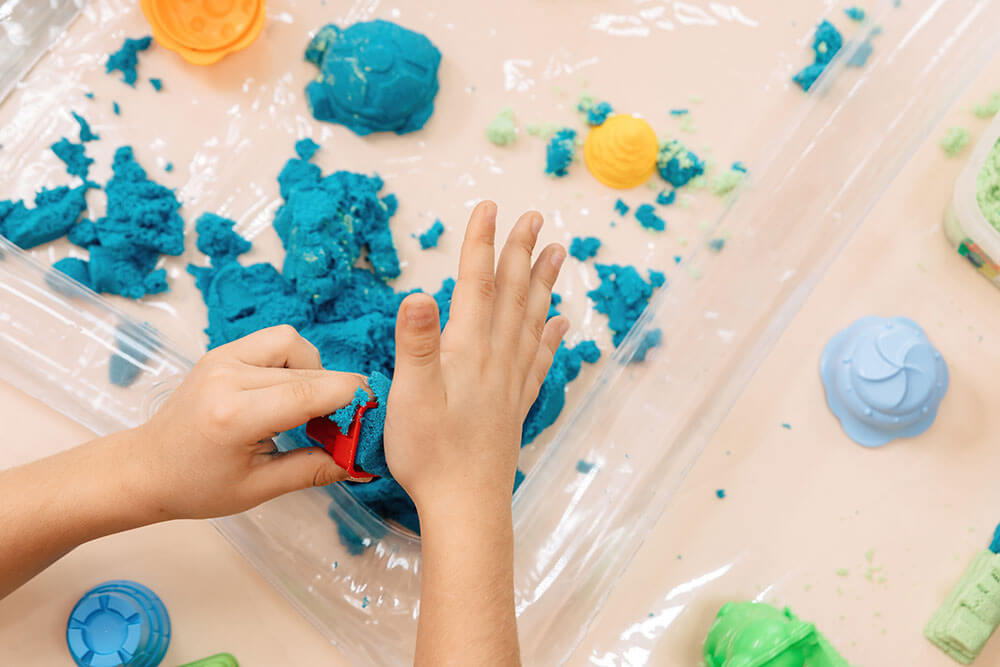
- Mess and dust. It is far less messy than loose sand, but it still sheds grains. Play in a tray or on a tablecloth, and expect to sweep a little.
- Colors mix. Once blue is combined with another color, you can’t separate them. Keep blue in its own tray.
- Not for outdoor or sandbox volume. It is a tabletop material, not a beach or backyard substitute.
- It picks things up. Hair, crumbs and dirt stick to it, so storage matters. The best way to store kinetic sand is a sealed container, plus clean hands and a clean tray at play time.
- Not edible. Supervise young children, and keep it out of mouths.
Blue From a Factory: Color Consistency and What We Don’t Publish
For a bulk buyer, the real question about blue is whether the next order matches the last one. We make our sand in-house on an automated production line with our own formula production, so color is controlled at the source. We have not published a color-tolerance figure, batch-matching data or dye test results, and we won’t imply we have. Here is what to pin down before you order:
| What buyers ask | What we can say | What to confirm in your quote |
|---|---|---|
| Batch color matching | Formula and production are in-house | How a reference shade is set and checked between batches |
| Reorder consistency | Blue is a standard color in our bulk range | Whether a color reference or sample can be provided for repeat orders |
| Dye stability | Not published | Dye type and any fade or migration testing available |
| Staining on fabric, wood or skin | We have not published test results for blue on these surfaces | Request a test on your own materials before a large run |
| Grain size | Not published | The specification for your format |
| Amount per child and tray size | Not published | Pack weight and the tray size you plan to pair it with |
If any of these decide your order, put them in writing when you contact us. In general, sand pigments are bonded to the grains to prevent color transfer; that is the mechanism, not a substitute for testing on your own materials.
Who Should Buy Blue Magic Sand, and Who Should Skip It
Home or classroom play. A good fit for supervised indoor play, sensory tables and themed lessons. Give each child a tray to keep the mess contained.
Therapy or sensory use. A good fit for calming, hands-on work. Follow your therapist’s or school’s own rules on supervision.
Bulk and wholesale buyers. A good fit if you need one consistent color for retail, kits or private label. Blue magic sand bulk packs come loose or prepacked, from woven bags and paper or plastic bags to jars, boxes and storage boxes. Pricing and minimum quantities are quoted on request.
Skip it if you want outdoor digging, a scented or edible material, or a single all-in-one multi-color set. Layered sand art that stays put calls for glued or colored craft sand instead, as magic sand art vs the alternatives shows. The two types of magic sand, moldable and hydrophobic, and what each is made of are explained in what is blue magic sand.
Which Kinetic Sand Brand Is Considered the Best?
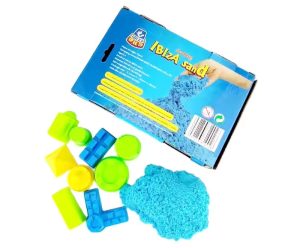
Kinetic Sand, made by Spin Master, is the best-known retail brand and presents itself as the original. Whether it is best for you depends on use. Check four things: texture and hold, safety documentation, color consistency across reorders, and price per unit. Bulk and OEM buyers should weigh manufacturer options too. Ours is glass-bead-based and comes in blue. The main differences in magic sand vs kinetic sand are the grain, the binder and the feel in the hand.
Frequently Asked Questions
-
How long will kinetic sand last?
Moldable sand is marketed as not drying out, but it does collect dust, hair and crumbs. Store it in a sealed container, keep colors separate, and replace it when it looks dirty or clumpy. No fixed lifespan applies, because it depends on how it is used and stored.
-
Does kinetic sand have bad chemicals?
Reputable makers have their sand tested against toy safety standards such as EN71 and ASTM F963, and buyers should ask for the test reports. Ours is China 3C certified and tested to EN71 and ASTM. Whatever the brand, it is not food. Keep it away from mouths and supervise young children.
-
What's the difference between kinetic sand and magic sand?
"Kinetic Sand" is one brand name. "Magic sand" is the general name for moldable sensory sands from many makers. Formulas and textures vary, so compare the specific product. Ours is glass-bead-based, while the best-known brand is usually described as fine sand coated with a silicone polymer; magic sand vs kinetic sand goes into the details.
-
What is magic sand made of?
Our magic sand is made from glass beads with a silicone-type binder, which gives it its flow and shape-holding behavior. Other brands use different materials, so check each product's label.
-
Is blue magic sand messy?
It is less messy than loose sand, but it still sheds some grains. Use a tray or tablecloth, and store it sealed so it doesn't pick up dust.
-
Can different colors be mixed?
Yes, but once mixed they can't be separated again. If you want to keep blue pure, give it its own tray and storage container.
-
Is blue magic sand good for therapy or classroom use?
It is widely used for sensory play because it is calm and tactile. Follow your school's or therapist's supervision rules. Pressing shapes, counting scoops and building scenes are among the easiest kinetic sand activities for creative learning and sensory play.
-
Can I buy blue magic sand in bulk?
Yes. We offer blue in bulk and in several packaging formats. Pricing and minimum quantities are quoted on request.
For bulk quantities, the bulk blue option lists the available formats, and quotes are handled through our contact page.