

Magic sand vs kinetic sand: is magic sand the same as kinetic sand? Usually, yes. Both names describe moldable play sand that holds its shape and does not harden like wet beach sand. As a moldable sand manufacturer, we get this question from buyers all the time. “Kinetic Sand” is a brand name. “Magic sand” is a generic label many sellers use, and it is sometimes applied to water-repellent sand, which is a different property.
Why the Two Names Get Mixed Up
A brand name vs. a generic term
“Kinetic Sand” is a specific branded product. Shoppers now use the phrase for any sand that molds and packs the same way, much as people say “bubble wrap” for any bubble film. “Magic sand” has no single owner. It is a plain description used by manufacturers and retailers.
Two packs with either name can differ in material, feel, colors and safety marking. The name tells you little. The label tells you more.
The other “magic sand”: water-repellent sand
Some videos use “magic sand” for sand that stays dry when pushed underwater. That is a surface-coating effect, not moldability, and a pack sold for one property may not have the other. Learn how water-repellent magic water sand works.
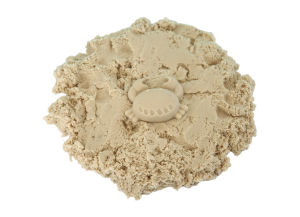
Side-by-Side Spec Check
| Spec | IBIZA (manufacturer data) | Kinetic Sand (brand-published) |
|---|---|---|
| Base material | Glass beads (smooth, round) | ~98% sand |
| Binder | Silicone-based | ~2% polydimethylsiloxane (PDMS, a silicone oil) |
| Handling (dry) | Does not stick to hands | Does not stick to hands |
| When wet | Turns sticky and crumbly; keep dry | Turns sticky and crumbly; keep dry |
| Colors | 8 in bulk: pink, orange, red, purple, green, blue, yellow, brown | Natural beige plus many retail colors |
Source: Kinetic Sand’s composition is the brand-published figure summarized in what’s in magic sand and kinetic sand. IBIZA entries are manufacturer data. Check the current label on any pack, since formulas can change.
Glass Beads vs. Silica Sand
Moldable sands use either glass beads or ordinary silica sand as the base grain. The choice changes how the product behaves in your hands.
- Texture: Glass beads are smooth and round, so the sand feels silky. Silica grains are irregular and angular, so it typically feels coarser.
- Flow: Round beads roll past each other and pour easily. Irregular grains grip one another more.
- Weight: Glass and quartz are close in density, so pack weight depends more on fill volume than on the base.
- Dust: Pour any moldable sand low and slowly, and open a sample before a large order.
The trade-off is grip against glide. Smooth beads give easy flow, but tall, thin builds lean more on the binder. Silica’s rougher grains interlock better but feel less refined. More detail: glass beads vs silica sand in moldable play sand.
Reading the Safety Marks on the Pack
Safety marks matter more than the name. Two you will see often:
- EN 71 is the European toy safety standard (it covers physical properties, flammability and migration of certain elements). IBIZA Magic Sand is tested to EN 71.
- ASTM F963 is the U.S. toy safety standard. IBIZA Magic Sand is tested to ASTM, with export testing carried out through SGS, a third-party testing company.
Any pack you buy should print an age grading and the standard it claims. If it shows neither, ask the seller for documents before you buy. See how EN 71, ASTM F963 and GB 6675 compare for toy sand. To see our test paperwork, request SGS reports through our contact page.
Does Moldable Sand Dry Out?
Moldable sand does not set hard the way wet sand or clay does. IBIZA Magic Sand does not dry out. But “won’t harden” does not mean “never changes.” Left uncovered, any moldable sand collects dust, hair and crumbs, and the texture turns dull or gritty. Water makes it sticky and crumbly. Store it in a closed container. Read whether kinetic sand dries out and how to revive it.
Which One Should You Use?
Kids’ play and sensory use
Choose by the age grading and safety marks on the pack, not by whether it says “magic” or “kinetic.” There is no cutoff age for enjoying it, and many adults use it for relaxation. For parents, magic sand vs kinetic sand: which is better for your kids goes deeper; you can also choose kinetic sand by age and sensory needs.
Crafts, terrain and mold-making
Moldable sand holds a shape well for vertical builds, sculpted scenes and scenery surfaces. Moisture is the risk: it changes how the sand behaves, so anything wet, such as poured plaster, is a gamble. We have not published casting test results for plaster or for humid conditions, so test a small batch first. Try these magic sand art ideas.
Where to buy
IBIZA Magic Sand is moldable glass-bead sand, and questions or SGS report requests go through our contact page. Retailers and distributors can order magic sand in bulk.
FAQ
-
Is magic sand the same as kinetic sand?
Usually they describe the same kind of moldable, non-hardening play sand. "Kinetic Sand" is a brand name, and "magic sand" is a generic label used by many sellers. Some people also call water-repellent sand "magic sand," so check the pack to see which property you are actually buying.
-
What can ruin kinetic sand?
Water is the main cause, since it makes moldable sand sticky and crumbly. Dirt, hair, pet fur and mixed-in materials also spoil it, and uncovered sand collects dust and changes texture. Keep it in a closed container. Wet kinetic sand can often be saved if it has been dampened.
-
What's better than kinetic sand?
It depends on what you value: budget, mess, texture, or an art or sensory purpose. Some people prefer modeling clay or dough, others a generic moldable sand. Compare indoor play sand vs alternatives.
-
Why does magic sand not mix with water?
The water-repellent kind of "magic sand" has a coated surface, so water beads up instead of soaking in. Moldable play sand is different: water changes how it behaves and can leave it sticky or crumbly. Read what magic water sand is.
-
At what age do kids stop playing with kinetic sand?
There is no set age. Follow the age grading printed on the pack for who should use it. Many older kids and adults keep using moldable sand for relaxation, sculpting and crafts, so it is not only a toddler toy.
-
Can you mix kinetic sand with water?
No. Water changes how moldable sand behaves and typically leaves it sticky or crumbly. It works best dry. If it gets damp, spread it out to dry before use.