

“Clay sand” or “sand clay” is not one product. It is any mix of sand and clay. In soil it is called sandy clay, clayey sand or loam; in natural building it is cob or plaster; in crafts it is sand-clay dough. Engineered sensory sand, such as kinetic or magic sand, is a different material.
What Is Clay Sand?
Clay sand is a mixture of sand grains and clay particles. Different fields name it differently:
- Soil science: sandy clay or clayey sand, depending on which dominates. Loam is the balanced mix of sand, silt and clay.
- Natural building: cob, a blend of clay, sand and straw.
- Crafts: sand-clay dough, made from sand, flour, salt and water.
Clay is not a form of sand. Clay particles are smaller than about 0.002 mm, while sand grains run from 0.05 to 2 mm. That size gap explains the behavior: clay is sticky and plastic when wet, while sand is loose and gritty.
What Is Clay Sand Used For?
Building and plaster
Clay, sand and fiber such as straw or hay are the base of natural plasters and cob walls. A commonly cited starting point for cob is about 1 part clay-rich subsoil to 2–3 parts sand by volume, plus straw, but the right ratio depends on how much clay your local earth already holds. To check, do a jar test: fill a straight-sided jar about one-third with soil, top it up with water, shake well and let it settle. Sand drops out within a minute or so, silt follows over hours, and clay stays suspended longest, so the layer thicknesses show your rough proportions. Test a small sample brick before building anything.
Clay is also being tested in concrete. Researchers at the National University of Singapore found that waste clay heated to 700 °C could replace up to half of the fine sand powder in ultra-high-performance concrete. The work was published in the Journal of Cleaner Production and reported by New Atlas in April 2021.
Soil and gardening
Adding a little sand to heavy clay soil can backfire, because the mix can set almost like cement. Colorado State University Extension and other university extension services caution that sand has to make up a large share of the soil to help, which is rarely practical in a garden bed. Compost and other organic matter are the usual recommendation instead.
Kids’ crafts and classrooms
Sand-clay dough feels heavy and earthy. Children can press handprints into it, make fossil imprints with toy animals, and let it air-dry into a keepsake. It suits fine-motor practice and sensory play.
How to Make Sand Clay Dough at Home
This is a published classroom recipe from Desert Montessori School:
- Mix 2 cups sand, 1½ cups all-purpose flour and 1¼ cups salt dry in a large bowl.
- Add 1 cup warm water a little at a time, stirring as you go. Add more flour or water as needed.
- Knead on a lightly floured surface. It should come together into a soft, pliable ball in under a minute, similar to play dough.
Kept in an airtight container, the dough stays soft. Left out, it air-dries until hard. Drying time depends on thickness and humidity, so there is no fixed figure, and no reliable storage life either. Treat it as a short-term craft dough. It is not edible: raw flour can carry E. coli, so supervise young children, keep the dough out of mouths, and wash hands after play. You can also heat-treat the flour first (bake it at 350°F / 175°C for about 5 minutes and let it cool). If you want sand that stays moldable without drying, see how to make magic sand.
Sand Clay vs. Kinetic Sand and Magic Sand
People often mix these up. Sand-clay dough is a craft mix that firms up. Kinetic and magic sand are manufactured sensory sands that stay loose and moldable instead of hardening. Magic sand and kinetic sand also differ from each other, starting with the base: IBIZA’s magic sand is built on glass beads, while branded kinetic sand uses fine natural sand. More differences are set out in magic sand vs kinetic sand.
| Sand-clay dough | Magic sand (IBIZA) | |
|---|---|---|
| Made of | Sand, flour, salt, water | Glass beads with a silicone-based binder |
| Over time | Hardens as it dries | Made not to dry out |
| Typical use | Keepsakes, fossil imprints, classroom crafts | Play, art and sensory use |
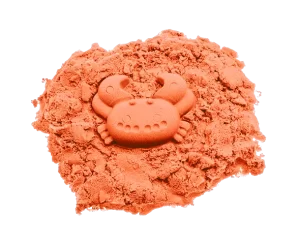
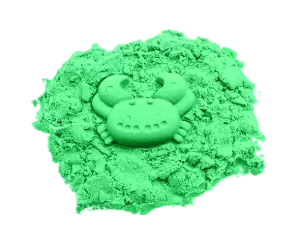
Sensory sand and polymer clay are also different materials. Check the manufacturer’s guidance before combining them or applying heat, since baking sand that contains a binder is not something to guess at.
For moldable sand you can shape and reshape for art or play, browse Magic Sand or get ideas from these magic sand art ideas. To see what sits inside it, read what is in magic sand. Buyers sourcing it in volume can contact us.
FAQ
-
What is clay sand used for?
It depends on the context. Clay-sand-fiber mixes go into natural plaster and cob, sandy clay and loam are soil types that affect drainage and gardening, and sand-clay dough is a children's craft. Researchers are also testing heated waste clay as a partial sand substitute in concrete.
-
How do you make clay sand?
For a craft, follow the dough recipe above. For soil or plaster, there is no single ratio: the right proportions depend on the clay content of your local earth and what you are building, so run a jar test and a small sample batch first.
-
What is a mixture of sand and clay called?
In soil classification it is sandy clay or clayey sand, and with silt added it is loam. In natural building, clay, sand and straw make cob. In crafts, it is usually called sand-clay dough.
-
Is clay a form of sand?
No. Clay particles are far finer than sand grains, so clay holds water and turns sticky and plastic when wet, while sand drains freely and stays loose.
-
Is sand clay the same as kinetic sand?
No. Sand-clay dough is a homemade mix that stiffens as it dries. Kinetic and magic sand are manufactured to stay loose and moldable. Products sold as "kinetic sand clay" generally behave like kinetic sand rather than like true clay.
-
Should you add sand to clay soil?
Only with care. Small amounts of sand can make clay soil denser and harder, not looser, so results depend on proportions. Most advice for clay soil is to add organic matter such as compost, which improves structure and drainage.