

Sand Sational ideas for therapy start with one rule: give sand a fixed 10–20 minute slot with a clear beginning and end. (“Sand Sational” here is a play on “sensational,” not a product name.) Sensory sand is a supportive tool used at the clinician’s discretion. It is not a treatment, and it does not replace clinical judgment or a treatment plan.
Why Sensory Sand Fits Into Therapy Sessions
Sensory sand gives hands something to do while a person talks, or while they choose not to. Many practitioners find that this lowers the pressure of face-to-face conversation. Pressing, smoothing, and shaping are repetitive, low-stakes actions. A client can start with the material before starting with words.
Sensory sand is not the same as traditional sandplay or sand tray therapy. Sandplay, as developed by Dora Kalff from Margaret Lowenfeld’s “World Technique” (see Kalff, Sandplay: A Psychotherapeutic Approach to the Psyche, Sigo Press, 1980), uses a specific tray and a set of miniatures. Professional bodies such as the International Society for Sandplay Therapy set their own training requirements for it. Moldable sensory sand is a looser, more flexible prop. It can sit beside talk-based work, or serve as a warm-up or closing ritual.
How to Build a Sand Segment Into a Session
A short segment of 10 to 20 minutes is often enough. Adjust to your setting and your client.
Prep and setup
- Use a shallow tray or bin with a mat or tablecloth underneath.
- Portion out sand per client instead of sharing one large tub.
- Set out only a few items: a spoon, a small rolling tool, two or three molds, and optional small figures.
- Keep a cleanup plan ready: a lidded container for the sand, and wipes or a handheld brush for the tray.
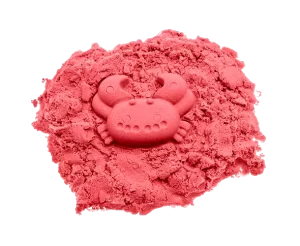
Open with grounding (2–5 minutes)
Invite a free-touch moment with no goal. Let the client squeeze, poke, or simply rest their hands on the sand. Then ask one simple check-in question, such as “What is your body doing right now?” or “Pick a color for today’s mood.”
The working phase
Offer either a guided prompt or open-ended building. Watch and describe what you see before you interpret it: “You pressed that down hard” is more useful than a quick reading of meaning. Let the client explain their own creation, and follow their language.
Close and reset
End with a brief verbal reflection: what was easy, what was hard, what they’d change. Then use a “smooth the sand” ritual as a closing cue. Wiping the surface flat signals that the segment is over and gives a predictable transition back to talk. For motor-focused planning, see Using Sensory Sand in Occupational Therapy.
Sand Activities by Session Goal
What you notice during these activities is material for conversation, not a diagnostic sign.
Emotional expression
Shape a feeling. Materials: sand, a tray. Steps: Ask the client to shape today’s feeling with their hands, then give it a name, or don’t. Notice: how they handle the sand (gentle, forceful, avoiding it) and whether they want to keep or flatten the shape.
Weather map of the day. Materials: sand, tray, small tools. Steps: The client builds a landscape showing how the day felt: storm, calm, fog. Notice: which parts get detail and which get skipped.
Calming and regulation
Squeeze, release, breathe. Materials: a handful of sand per hand. Steps: Squeeze slowly while breathing in, release while breathing out, for a few rounds. Notice: whether pace or grip changes over time.
Press-and-smooth patterns. Materials: tray, a flat tool or fingers. Steps: Press a repeating pattern, smooth it, repeat. Notice: whether the client settles into a rhythm. For more calming sequences, see sensory play ideas with kinetic sand for autism therapy.
Storytelling and communication
Build a scene and narrate it. Materials: sand, a couple of molds or figures as generic props. Steps: The client builds a place, adds characters, and tells what happens. The clinician asks open questions: “What happens next?” Notice: who is in the scene, who is missing, and where the story changes pace.
Focus and fine-motor warm-ups
Short tasks such as pinching, rolling, and lining up small shapes can warm up hands before writing or drawing. For a longer menu, browse these kinetic sand activities for creative learning and sensory play.
Adapting for Age, Group Size, and Sensory Preferences
- Individual vs. small group: Individual sessions allow quiet, slower work. In a small group, give each person their own tray and portion. Shared tubs invite conflict and make hygiene harder.
- Clients who dislike the texture: Let them opt in. Begin with a spoon or tool, offer gloves, and let them watch first. Never require direct touch.
- Older kids and adults: Frame the sand as a “hands-busy” aid that can make talking easier, not as a children’s toy.
- Neurodivergent clients: Keep the segment’s order the same every visit so the client knows what comes next. Use a visual timer so the end of the segment is never a surprise. Choose quiet, noise-free tools such as wooden spoons and soft-edged molds over anything that clicks or scrapes. The occupational therapy perspective is covered in how OTs use Magic Sand for autism and ADHD.
Choosing Sand for Therapy Use
A clinical setting asks for different things than a playroom. Check these criteria before you buy:
| What to check | Why it matters in sessions |
|---|---|
| Non-toxic labeling | Clients may touch their faces or mouths |
| Little or no smell | Strong scents can bother sensitive clients |
| Not sticky on hands | Sticky sand makes opting in harder |
| Holds its shape | Molded forms support storytelling |
| Doesn’t dry out between sessions | Sand stays usable when stored |
| Easy cleanup | Session turnover is short |
| Range of colors | Color choice supports expression prompts |
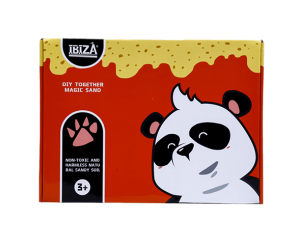
Our IBIZA Magic Sand is made from glass beads with a silicone-based binder. It is non-toxic, odorless, not sticky on hands, and made not to dry out. It is certified to China 3C and tested to EN71 and ASTM, with testing through SGS. Check the labeling on the product you receive against your workplace’s requirements. It comes in multiple colors, and the advantages and limitations of one color line are laid out in blue magic sand: advantages and limitations.
Curious what’s inside, or want to make your own? See how to make magic sand. Practices that need larger quantities or custom colors can contact us for a quote.
Safety and Boundaries
- Supervise sessions and match materials to the client’s age.
- Molds and figures are small parts. Keep them away from young children who mouth objects.
- Sand is not food. Set that rule at the start.
- Ask about allergies and skin sensitivities before the first session.
- Replace the sand after a client’s illness or any visible contamination, in line with typical workplace hygiene practice for shared tactile materials.
- Follow your workplace’s hygiene policy and the product’s labeling.
- Sand supports the session. It does not replace clinical judgment, and you should not claim outcomes it can’t promise.
Add Sand to Your Next Session
Start with one short segment and one goal, then adjust after each session. When you’re ready to choose material, explore Magic Sand, or contact our team with your quantity or color needs.
FAQ
-
How do you use sand in therapy sessions?
Set aside a short segment, roughly 10 to 20 minutes. Open with free touch and a check-in question, then offer a prompt or open building. Observe before interpreting, and close with a brief reflection and a "smooth the sand" ritual. Adjust the length and activity to the client and setting.
-
What is sand tray therapy, and how is it different from using sensory sand?
Sand tray therapy, or sandplay, uses a tray of sand and a collection of miniature figures within a defined therapeutic method that typically requires specific training. Sensory sand is a looser tactile tool. Clinicians can use it for warm-ups, regulation, or storytelling without following a sandplay protocol.
-
What kind of sand is best for therapy sessions?
Look for sand that is labeled non-toxic, has little or no smell, isn't sticky on hands, holds its shape, and stays usable between sessions. Easy cleanup and a range of colors help too. Check the manufacturer's stated safety testing against your workplace's requirements.
-
Is magic sand or kinetic sand safe for children in therapy?
Safety depends on the product and the supervision. Choose sand with clear non-toxic labeling and stated safety testing, keep molds and small figures away from young children who mouth objects, and set a no-eating rule. Ask about allergies or skin sensitivities first, and follow your workplace's policies.
-
How do you keep the sand clean between clients?
Portion sand per client instead of sharing a tub. Brush or wipe trays after each session, wash tools and molds, and store used sand in a lidded container. Replace the sand after a client's illness or any visible contamination, which matches typical workplace hygiene practice. Follow your own site's policy on reuse.