

What is kinetic sand made of? Mostly fine sand plus a small amount of silicone binder: Kinetic Sand packaging (a Spin Master brand) lists 98% sand and 2% polydimethylsiloxane (PDMS, also called dimethicone). Moldable magic sand uses the same recipe idea, sometimes with a different grain, and that grain is what changes the feel.
What is in kinetic sand?
- Grain (about 98%): ultra-fine sand particles. Natural sand is typically silica (quartz). The grains make up the bulk of the material and give it its soft, gritty feel.
- Binder (about 2%): dimethicone, a silicone-based compound. It coats each grain so the grains cling to one another instead of to your hands. That’s why the sand holds a shape, then slumps when poked.
Retail copy that says “98% pure sand and 2% magic” is shorthand for that binder.
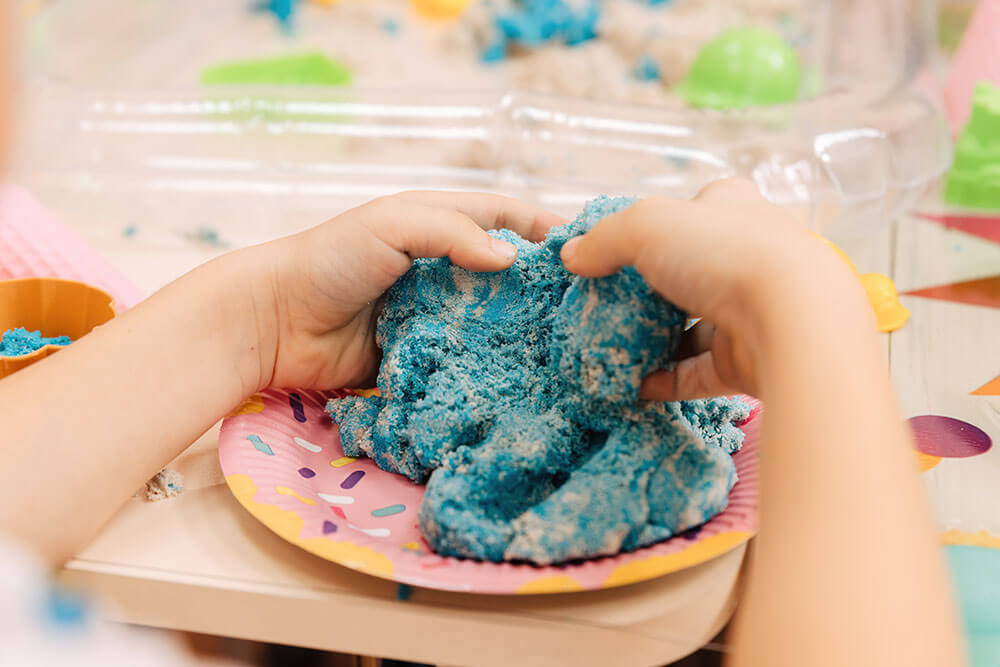
What’s in magic sand? Same design, different grain
Our magic sand keeps the silicone-based binder but swaps natural sand for ultra-fine, smooth, round glass beads. Only the grain changes.
| Classic kinetic sand | Our glass-bead magic sand | |
|---|---|---|
| Grain | Natural sand particles | Ultra-fine glass beads |
| Grain shape | Natural, irregular grains | Smooth and round |
| Binder | Silicone (dimethicone/PDMS, as brands report) | Silicone-based |
Round beads roll past one another easily, which helps the sand flow and feel soft. The full material comparison is in glass beads vs silica sand. To see the product, visit Magic Sand, or contact us about bulk and private-label orders.
Why it doesn’t dry out
Ordinary sand clumps because of water, and water evaporates. The binder here is silicone, not water, so there is nothing to evaporate, which is why magic sand and kinetic sand don’t dry out. Sand still loses its softness when dust or moisture gets in, so keep it in a closed container between uses. Pour it low and slowly to keep fine dust out of the air, and keep it away from faces.
Where each type fits
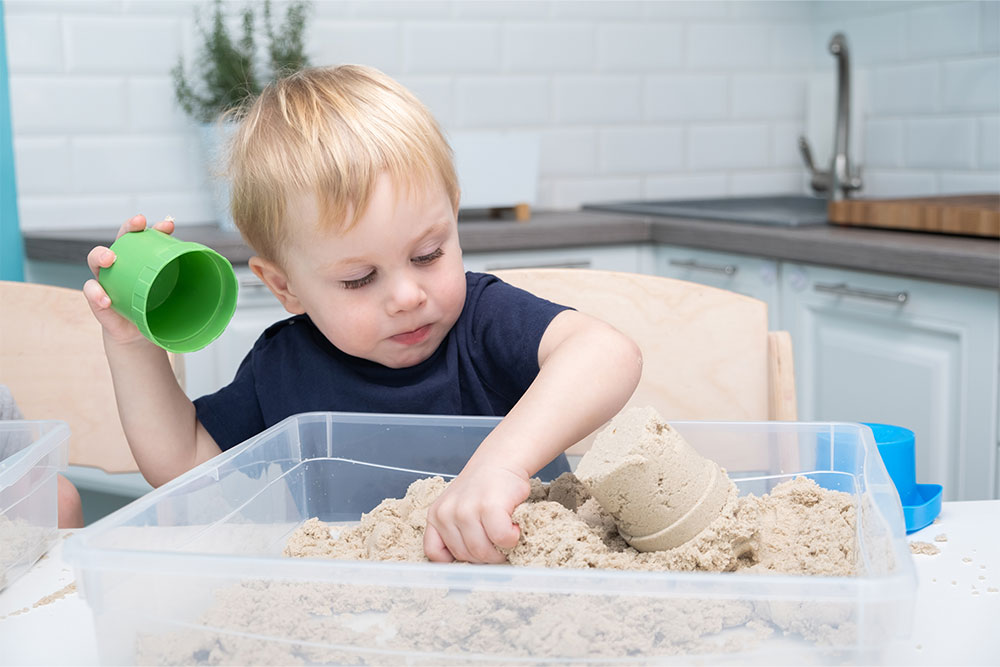
Both types suit the same uses: open-ended play, sensory bins, classroom work and stress relief. Glass-bead magic sand pours more smoothly and feels silkier; natural-sand kinetic sand feels slightly grittier and packs firmly. For winding down, see Relax with Magic Sand. For sensory needs, read about calming sensory toys for autism. If you’re buying for a child, choosing by age and sensory needs is the place to start.
Need a sensory sand made to your specification? Contact us.
FAQ
-
Is kinetic sand non-toxic?
Brand and retail copy calls kinetic sand non-toxic and gluten-free, and its main ingredients are sand and silicone. It is still not food, so supervise young children. Our glass-bead magic sand is tested to EN71 and ASTM. Age guidance is in choosing by age and sensory needs.
-
What can I use instead of kinetic sand?
Glass-bead magic sand is the closest commercial alternative, with a similar clean, moldable feel. Kitchen mixes, such as cornflour and baking soda, make a softer, dough-like material that feels quite different from sand-based products.
-
Why do they call it kinetic sand?
"Kinetic" means motion. The sand flows like a thick liquid when it moves, then holds its shape when pressed. Because the binder makes it stick to itself rather than to hands, it keeps that flowing behavior without leaving a mess.
-
How do I make my own kinetic sand?
The commercial version needs fine sand plus a silicone binder, which is hard to reproduce at home. The usual kitchen version mixes play sand, cornstarch and oil; it molds well but does not last as long. Step-by-step ratios are in how to make magic sand.