

Comparing indoor play sand vs alternatives starts with what can go in the bin: play sand, construction sand, moldable sand, or non-sand fillers such as rice. They differ in processing, dust, labeling and how they behave in a child’s hands. The right pick depends on the child’s age, the setting and how much mess you can tolerate.
Play sand suits digging; moldable sand suits low-mess shaping
| Option | Best for | Indoor mess | Main safety consideration | What to check |
|---|---|---|---|---|
| Play sand | Digging, pouring, sand tables | Moderate; loose grains travel | Fine dust; quality varies by supplier | “For play” labeling, dust level, documentation |
| Construction / masonry sand | Building projects, not play | High; often dusty | Not made or labeled for children | Avoid for indoor play |
| Moldable (binder-coated) sand | Molding, shaping, tabletop play | Lower; grains cling together | Age fit; still not edible | Named test standards, not just “non-toxic” |
| Colored craft sand | Layered art, jars, gluing | Moderate | Made for crafts, not necessarily bins | Intended use on the pack |
| Rice, oats, dry beans | Scooping and pouring with toddlers | Moderate | Choking, pests, food waste | Supervision; discard when stale |
Entries describe typical products, and quality varies by supplier.
Is there a difference between play sand and regular sand?
Usually, yes. “Regular sand” is ambiguous, so it helps to separate what people mean by it.
Regular sand usually means construction, masonry or concrete sand, or natural beach sand. Construction sand is produced for building work. It isn’t screened or labeled for children’s hands, and its cleanliness and dust content vary. Beach sand carries whatever the beach carries.
Play sand is sand sold for play. It is typically washed and screened to a more uniform, fine grain and carries intended-use labeling, so the seller has considered a child using it.
The difference isn’t guaranteed. “Play sand” is not a single universal grade. Two bags with the same name can differ in dust, grain and cleanliness, so the label and documentation matter more than the name.
What is the safest sand for children to play in?
No sand is safest in every case. Age, supervision and setting all change the answer. The safest choice is sand made and labeled for children’s play, low in dust, and backed by test or safety documentation from the supplier.
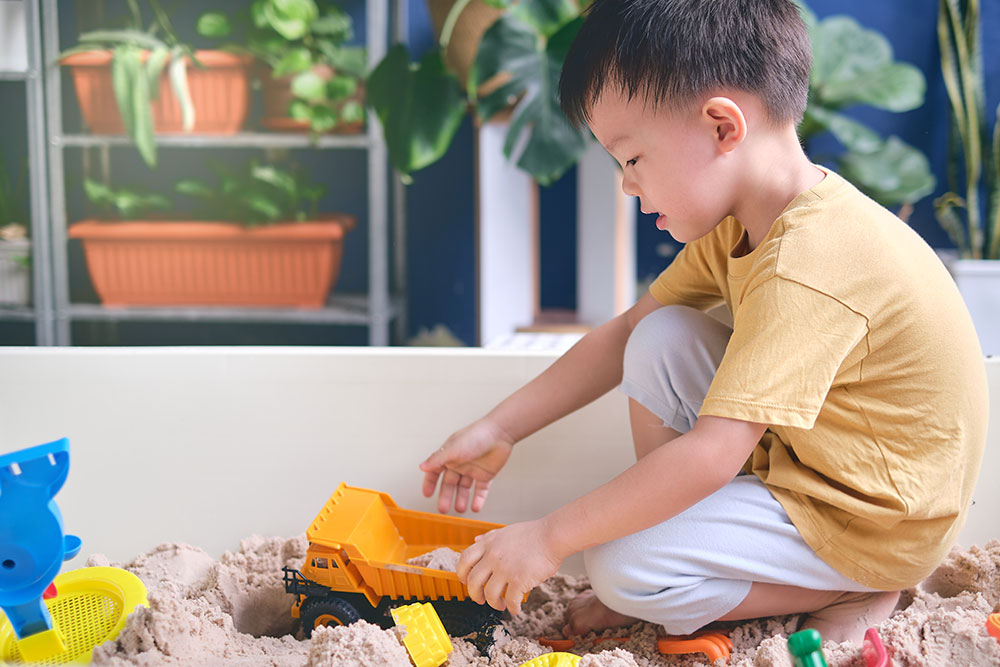
Use this checklist:
- Made for children’s play. Skip construction sand for indoor bins.
- Low dust. Many natural sands are mostly quartz, which is crystalline silica. Inhaling very fine particles over long periods is linked to lung disease, mainly in occupational settings. Avoid dry pouring from a bag in a closed room and keep sand covered.
- Documentation over adjectives. “Non-toxic” alone tells you little. Ask for a test report naming the standard, the lab, the date, and the exact product it covers. For natural play sand, also look for a label or test sheet stating it is free of asbestos, including tremolite. ASTM F963 (US) and EN 71 (Europe) are toy standards, but whether a sand falls under them depends on how the seller classifies it. For how they compare, see GB 6675-2025 vs EN 71 and ASTM F963 for toy sand.
- Age fit. Toddlers who mouth objects need close supervision with any sand. Non-toxic does not mean edible. Age and sensory needs change which sand fits.
- Skin and cleanliness. Stop use if a child shows irritation. Keep sand covered, and replace it if it gets wet, dirty or contaminated.
At home you control supervision and cleanup. In a daycare or classroom, many children share the same sand, so covered storage and paperwork matter more.
Indoor play sand vs alternatives, option by option
Indoor play sand is the baseline for digging, pouring and scooping. It is loose, so grains spread beyond the bin, and dust depends on how well it was washed and screened.
Construction or masonry sand is cheaper but isn’t made for play. Variable cleanliness and dust make it a poor fit for bare-handed indoor bins.
Moldable (binder-coated) sand clings together, so it packs, cuts and holds shapes, and it is usually less loose and dusty. The trade-offs are higher cost and a different feel; it suits tabletop molding better than deep digging. Kits add molds and tools; compare them in magic sand kit vs alternatives. For decorative projects, see magic sand art vs alternatives.
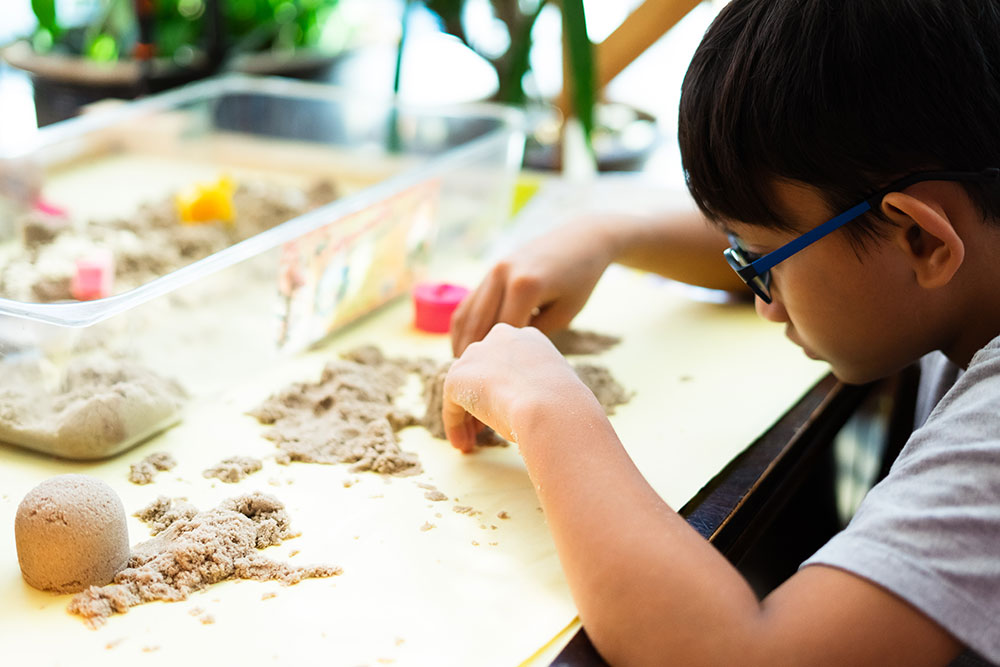
Colored craft sand is for art such as layering in jars or gluing. It isn’t intended as a play-bin filler unless the pack says so.
Rice, oats and dry beans are cheap, and toddlers can scoop and pour them. The trade-offs are food waste, pests, moisture and choking hazards. They also don’t mold.
How to choose: a five-step decision
- Age and supervision. Closer supervision and stricter documentation checks for toddlers.
- Setting. Home, daycare and classroom tolerate different levels of dust and shared handling.
- Mess tolerance. Less cleanup capacity points toward binder-coated sand or a lidded bin.
- Play style. Digging and pouring suit play sand; molding suits moldable sand.
- Quantity and budget. Compare quotes on a delivered per-kg basis, not the bag price.
If children mostly dig and pour, choose play sand made for children. If they shape and build, choose moldable sand. For art, choose craft sand.
When indoor play sand in bulk makes sense
Larger quantities are practical for classrooms, daycares and shared play spaces where several bins need refilling. If that’s your situation, look at IBIZA’s indoor play sand in bulk and ask for the documents above for that specific product before you buy. Need larger volumes for a classroom, daycare or retail range? Send IBIZA your requirements for a quote.
Frequently asked questions
-
How often should you replace indoor play sand?
There is no universal calendar. Replace sand whenever it gets wet, smells musty, shows mold, or is contaminated by food, bodily fluids or debris. Shared settings such as daycares should follow their own hygiene policy and the supplier's guidance. Covering the bin between uses helps the sand last.
-
How do you keep indoor sand from making a mess?
Use a bin or tray with a raised lip, place it on a mat or sheet, and set a "sand stays in the bin" rule. Avoid dry pouring from a bag. Binder-coated sand clings together and spreads less than loose play sand, though it still needs sweeping.
-
Is moldable sand better than regular play sand indoors?
For mess and dust, often yes, since its grains cling together. For deep digging and free pouring, loose play sand fits better. Moldable sand usually costs more, and it still isn't edible. Choose by play style and cleanup capacity, not by a single label.