

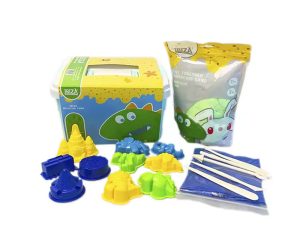
In magic sand kit vs alternatives, a kit is the right pick if you want a contained, ready-to-play activity: sand, molds and tools in one box, with nothing else to buy. Four alternatives suit different jobs. Loose refill sand suits people who already own tools. Branded playsets add a theme. Regular play sand belongs outdoors. A homemade mix is the budget route. “Magic sand” also means two different products online, and mixing them up is the most common buying mistake.
The short answer: which option fits which situation
Moldable sand clings to itself, so a kit, loose moldable sand or a playset stays on a tray, while play sand and most DIY mixes scatter. That difference in mess drives most of the choice.
| Option | Best for | Mess level | Indoor / outdoor | Comes with tools | Relative cost per lb of sand | Main drawback |
|---|---|---|---|---|---|---|
| Magic sand kit (sand + molds/tools) | Gifts, first-time buyers, ready-to-play tabletop sessions | Low: sand clings to itself | Indoor / tabletop | Yes | Medium to high (tools included in the price) | Less flexible than loose sand; you get the molds that ship |
| Loose magic or kinetic-style sand | People who already own tools, refills, larger builds | Low | Indoor / tabletop | No | Lowest of the moldable options | You supply your own molds and containers |
| Branded playset | Kids attached to a theme or character | Low to moderate, depending on the set | Indoor | Yes, themed | Highest | Locks you into one theme; pieces are specific |
| Play sand (sandbox) | Outdoor digging and large-scale play | High: dusts and tracks | Outdoor | No | Very low | Doesn’t hold its shape when dry; not a clean indoor material |
| DIY mix | Tight budgets, one-off experiments | Moderate: crumbles and leaves residue | Either | No | Low (sand plus cornstarch and oil or water) | Water-based mixes dry out; oil-based mixes lose cohesion and can go rancid |
How to read the cost column. It compares cost per pound of sand, not IBIZA pricing, and actual prices move with brand, pack size and season. Kits and playsets often hold only a pound or two of sand, while loose moldable sand is sold in larger packs by weight. Compare price per pound, not price per box, and check the net weight printed on the pack. Moldable sand kits and playsets are commonly labeled for ages 3 and up because of small mold pieces, but read the label on the exact product. Play sand carries no toy age label at all.
A typical kit bundles sand, molds and cutting or shaping tools, sometimes with a tray or storage box; what comes in a magic sand kit varies by brand, so check the contents list.
One tray, one week: a simple test box
The fastest way to settle the choice is to run the same test on every option. Use one shallow tray, the same room, and roughly 1 lb of each material, one at a time (or in matching trays side by side).
| Step | What to do | What to record |
|---|---|---|
| Day 1 | Twenty minutes of play with the same two molds | Crumbs or grains on the floor and table; minutes to wipe up |
| Day 1 night | Leave the tray uncovered overnight | Surface feel the next morning |
| Days 2–6 | Repeat short sessions; keep the tray uncovered between them | Texture, crumbling, whether the sand still holds a mold |
| Day 7 | Final mold test | Does it hold shape? Does it feel dry, gritty or greasy? |
What to expect, based on how each material behaves. These are expected outcomes to check against your own results, not measurements from a lab:
- Play sand: the most grains on the floor from day one, and no shape held when dry.
- DIY cornstarch mix: moderate mess, a slick residue on the tray if it is oil-based, and visible crumbling by the end of the week (water-based versions also dry out).
- Loose or kit moldable sand: the least to wipe up, since grains cling to each other, and the texture should hold through the week.
- IBIZA sand: it is formulated not to dry out, and day 7 is the place to confirm that against your own tray.
What’s the difference between kinetic sand and magic sand?
In everyday use, very little. Both terms describe moldable sensory sand that sticks to itself instead of pouring like beach sand. “Magic sand” can also mean hydrophobic sand that stays dry underwater, so the two names don’t always describe the same thing.
Where the names overlap. “Kinetic Sand” began as a brand name and is now widely used as a generic term. Sellers use “magic sand,” “moldable sand,” “motion sand” and “kinetic sand” for the same kind of product: fine grains, a binder, a squeezable and moldable feel. A listing that shows kids shaping castles is almost certainly this category.
Where they split. The second meaning of “magic sand” is the science-kit kind, coated so water beads off it and the grains come out dry. That is a different product with a different job. If you want a sand that molds and holds shape, look for words like “moldable,” “sticks to itself” or “sensory play.” If you want a water demonstration, look for “hydrophobic” or “space sand.”
What differs in practice. Brands vary in grain feel, cohesion and packaging, and they don’t share one recipe. IBIZA’s sand is made from round glass beads with a silicone-type binder, while many kinetic-style sands use fine natural sand. Those grain and binder choices are the real difference between magic sand and kinetic sand, more than the name on the box.
Why doesn’t magic sand mix with water?
Hydrophobic sand has grains with a water-repelling coating. Water can’t wet the coating, so it pulls into a bead or sheet around the sand instead of soaking in. Pour it into a glass of water and it forms silvery, dry-looking clumps and columns, then pours out as dry, loose sand when you lift it out.
That behavior belongs to the “space sand” type. Moldable kit sand is sold for shaping and sensory play, not for water demonstrations, and wet moldable sand can often be dried and revived. The dry-underwater effect of hydrophobic sand makes a simple magic sand science experiment with a glass of water.
Kit vs loose sand vs playset: what you’re really paying for
The main question is whether you need the tools.
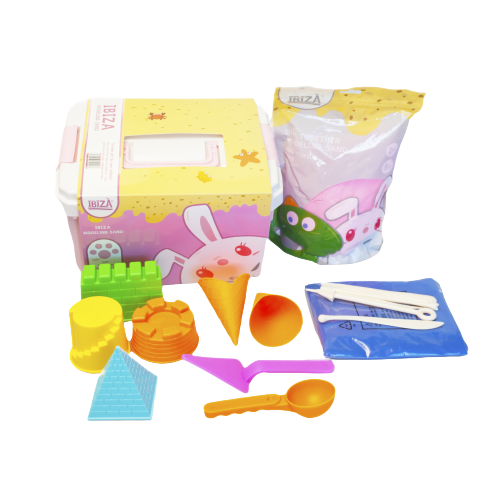
A kit bundles sand with molds and tools, so it’s ready to play the moment it’s opened. That makes it a natural gift and a sensible first purchase. Nobody has to hunt for containers, and the molds already suit the sand. IBIZA’s kit listings are described as complete sets with molds and tools, with mold accessories such as cake, dinosaur and castle shapes. If that’s the format you want, look at the IBIZA magic sand kit with molds and tools.
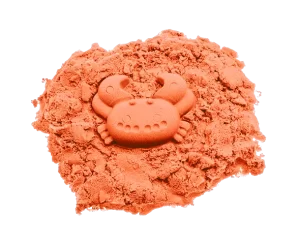
Loose or refill sand gives you flexibility. You choose the molds, use kitchen tools if you like, and can top up a set that has run low. It is also the cheapest moldable option per pound. If you already own molds and trays, buying a second kit means buying duplicates.
Branded playsets add themed scenes, characters and vehicles. Kids drawn to a theme often play longer with one. The trade-off is that a playset can lock you into that theme, its pieces rarely fit other play, and it carries the highest cost per pound of sand.
The honest trade-off for kits: a kit is a bundle, so you can’t pick each mold. If a child outgrows the shapes, the sand is still useful, but the set has done its main job. Loose sand ages better as a child’s play gets more creative.
DIY mixes sit at the budget end. A common recipe is fine sand, cornstarch and a little cooking or baby oil, stirred until it clumps; other versions use water and dish soap instead of oil. The limits are real: water-based mixes dry out and crumble, oil-based ones lose cohesion and can go rancid, the texture is grainier and less cohesive than a silicone-bound sand, and the oil can stain fabric and surfaces. It works for a one-off experiment, not for repeated play. To try one, follow a step-by-step DIY magic sand recipe and keep the mix away from children who still put things in their mouths.
Magic sand vs play sand: is regular sand a better alternative?
For the outdoors, yes. For a tidy tabletop, no. Play sand is natural, inexpensive and made for digging. It also dusts, tracks through the house, and doesn’t hold a shape when dry.
Fine dry play sand gets airborne; moldable sand sheds less because its grains cling together. Neither material comes with medical promises, but if dust is a concern, keep sand play on a tray, and keep dry play sand outside.
What is a safe alternative for an outdoor sandbox? Sandbox fill is a different job from tabletop sand play. It needs a large volume of material that can sit outside and be dug in, which is not what a kit is built for. Three common fills:
- Washed play sand: the standard choice and the best for digging and castles. It dusts when dry, and it needs a cover to keep animals and debris out.
- Coconut coir: a soft, natural, low-dust fill. It holds less shape than damp sand and needs topping up as it breaks down.
- Wood chips or mulch: cheap and low-dust, but they don’t mold or pile like sand, and splinters are a risk for bare hands and feet.
Don’t treat a magic sand kit as sandbox fill. Indoors, the choice is different again: indoor play sand vs alternatives such as moldable sand or sensory fillers comes down to mess and volume.
Can you mix them? Keep them separate. Mixing moldable sand with play sand changes the texture and makes cleanup harder. Mixing two moldable sands blends two different feels and colors, and you can’t easily separate them again.
Safety and materials: what to check before buying
The most common question is about the silicone ingredient. PDMS-type polymers appear in silicone putty and many cosmetics as well as in some moldable sands. The way to check is to read the manufacturer’s stated standards, not to rely on a forum verdict either way. Whether kinetic sand is toxic depends on its binder and the standards it was tested to.
IBIZA’s sand is China 3C certified and tested to the European EN71 and American ASTM toy standards, including through the testing company SGS, and it is non-toxic and odorless. For any product, IBIZA included, request the test documents from the seller before you buy; contact us for IBIZA’s.
Some practical rules apply to every option:
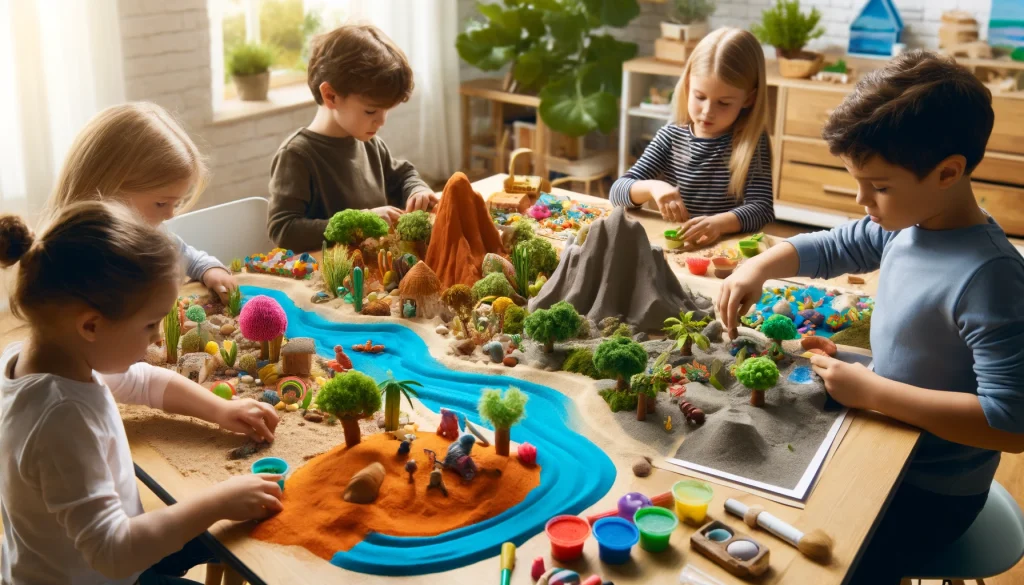
- Supervise young children. Loose sand and small mold pieces are not for mouths, and the right kinetic sand age for kids depends on mold size and the child.
- Check the packaging for the age label and the standards it lists.
- Keep sand play on a tray or table, and away from food and drinks.
- Moldable sand stays soft longer when stored covered.
Pick by situation: quick recommendations
- Gift for a young child: a kit. Everything is in one box, so there’s nothing to buy on top.
- A low-mess household: moldable sand on a tray, kit or loose. Avoid play sand indoors.
- Teacher or group use: loose sand plus your own trays and tools, or one kit per small group. A preschool sensory sand station is built around trays and shared loose sand.
- Outdoor sandbox: washed play sand. It is the right tool for the job.
- Tight budget or curiosity: a DIY mix for a one-off try, then a kit or loose sand if your child loves it.
- Sand art projects: a permanent piece needs glue or sealed bottles, while moldable sand suits reworkable scenes; magic sand art vs alternatives turns on permanence.
If a kit fits, see what’s in the IBIZA kit. If you need a private-label version or have questions about contents, contact us.
FAQ
-
Which kinetic sand brand is considered the best?
There is no single best brand. Judge any brand on five points: texture (soft, cohesive, not sticky on hands), stated safety testing and whether the seller supplies documents, kit contents that suit the child's age, resealable packaging, and refill availability. The brand that scores well on those and fits your budget is the best one for you.
-
How much does refill sand cost compared with a new kit?
Per pound of sand, loose moldable sand usually costs less than a kit, because the kit price also covers molds and tools. If you already own molds, refills are the cheaper route. If you own none, a kit is often cheaper than buying sand and tools separately. Compare net weights, not box prices.
-
Do I need a kit if I already have molds and trays?
No. Loose sand does the same job for less, since you would be paying again for tools you own. A kit only makes sense as a gift, a first purchase, or when you want matching molds in one box.
-
What is the best safe alternative to sand for an outdoor sandbox?
Washed play sand, with coconut coir as a low-dust option; a moldable sand kit is not sandbox fill.
-
Are kinetic sand and magic sand the same thing?
Usually, but "magic sand" can also mean water-repelling hydrophobic sand, so check the listing wording.
-
Why does magic sand not mix with water?
Hydrophobic magic sand has a water-repelling coating on its grains, so water beads up instead of soaking in.
-
Is magic or kinetic sand safe for kids?
It depends on the product and supervision; ask for test documents, follow the age label (usually 3 and up), and supervise young children.
-
Does magic sand dry out?
Moldable sand bound with silicone, such as IBIZA's glass-bead sand, is formulated not to dry out, while homemade water-based mixes dry and crumble.