

“Magic water sand” isn’t one standardized product. People use the phrase for three different things: water-repellent sand that stays dry underwater, moldable sensory sand sold as “magic sand,” and water-drawing boards bundled with a small zen-garden sand tray. Each behaves differently around water, and the right one depends on what you want to do with it.
Three things people mean by “magic water sand”
The name gets applied to three unrelated products, so check which one you’re buying.
| Type | What it is | What happens with water | Typical use |
|---|---|---|---|
| Water-repellent (“underwater”) sand | Sand grains with a water-shedding coating | Water beads up; the sand comes out dry | Science demos, novelty toys |
| Moldable sensory sand | Sand that clumps and holds shape in your hands | Not used with water; wetting can change how it feels | Sensory play, crafts, kits, classrooms |
| Water-drawing boards with zen-garden sand sets | A board or tray product, not a sand type | You draw with water; the board dries and resets | Reusable drawing, tabletop zen-garden sets |
Water-repellent (“underwater”) sand
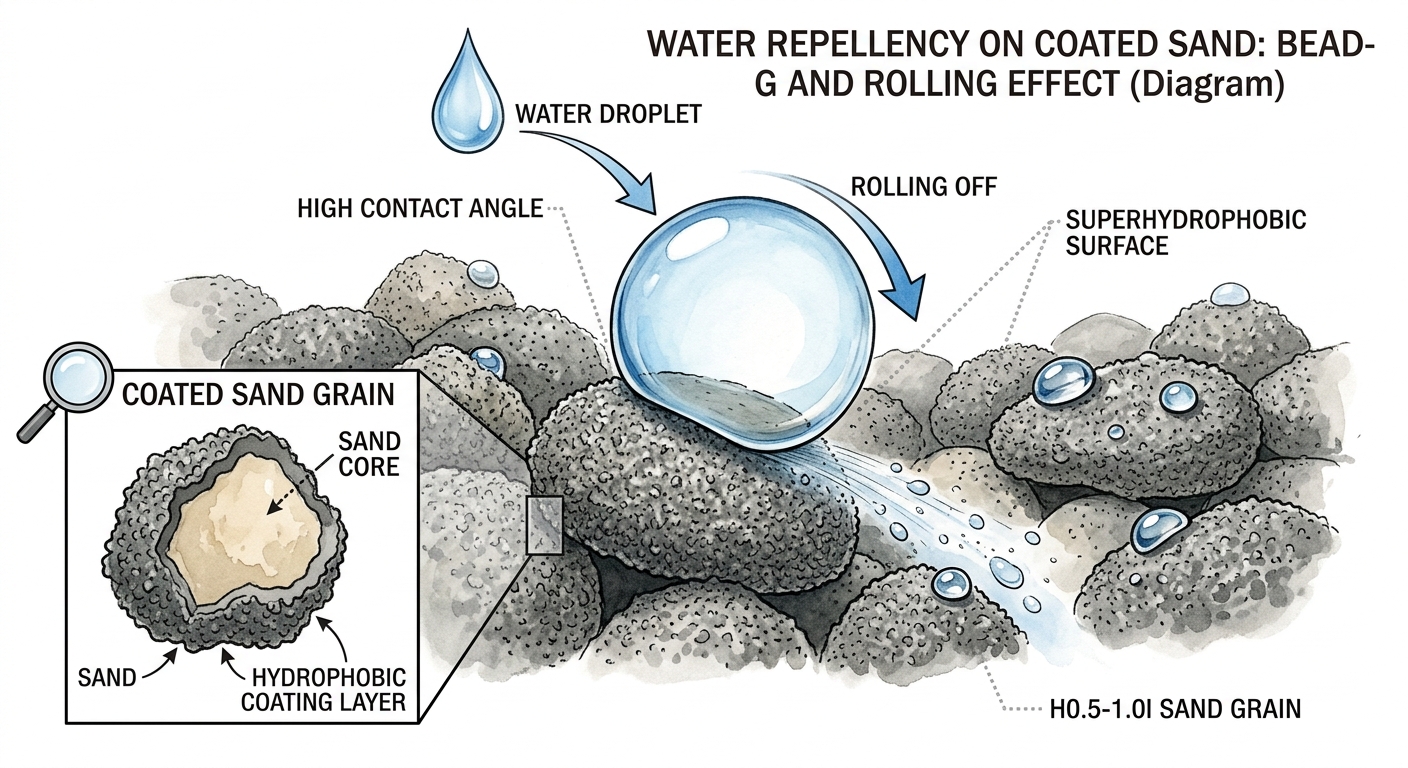
This is the version behind most “underwater magic sand” videos. Each grain carries a thin coating that water can’t wet. Submerged, a film of air clings to the coated grains, so the sand keeps whatever shape you push it into. Lifted out, the grains are dry because water never touched them. The technical terms are water-repellent or hydrophobic sand. Commercial versions are typically fine sand treated with an organosilicon compound (trimethylsilanol is the classic example), an idea first explored for trapping oil spills near shorelines. For the chemistry, see what makes sand hydrophobic.
Moldable sensory sand
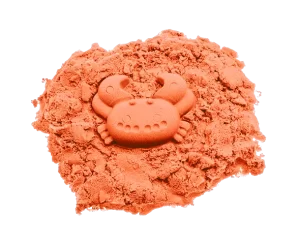
This is the sand people press, cut, stack and shape with molds. It is what most retailers sell as “magic sand,” and it’s the category IBIZA manufactures. It’s meant for dry, hands-on play, so water isn’t part of using it. See our moldable Magic Sand for the product itself.
Water-drawing boards with zen-garden sand sets
Some listings are inkless water-drawing boards. You paint on a special cloth or board with a water-filled brush, the marks show up dark, and they fade as the water evaporates, so the surface can be reused endlessly. Some of these boards are sold as bundles with a small tabletop zen-garden tray, a bag of sand and a few small decorative spheres for rolling patterns. In these sets the “magic” is the water-drawing board; the sand is simply the zen-garden part of the bundle and doesn’t react with water in any special way.
Does magic sand get wet? What happens in water
The answer depends on which type you have.
Water-repellent type. Water beads on the surface and rolls off, and the sand comes out dry. This comes from the grain coating and the trapped air film, and it’s a property of the category, not of any one brand.
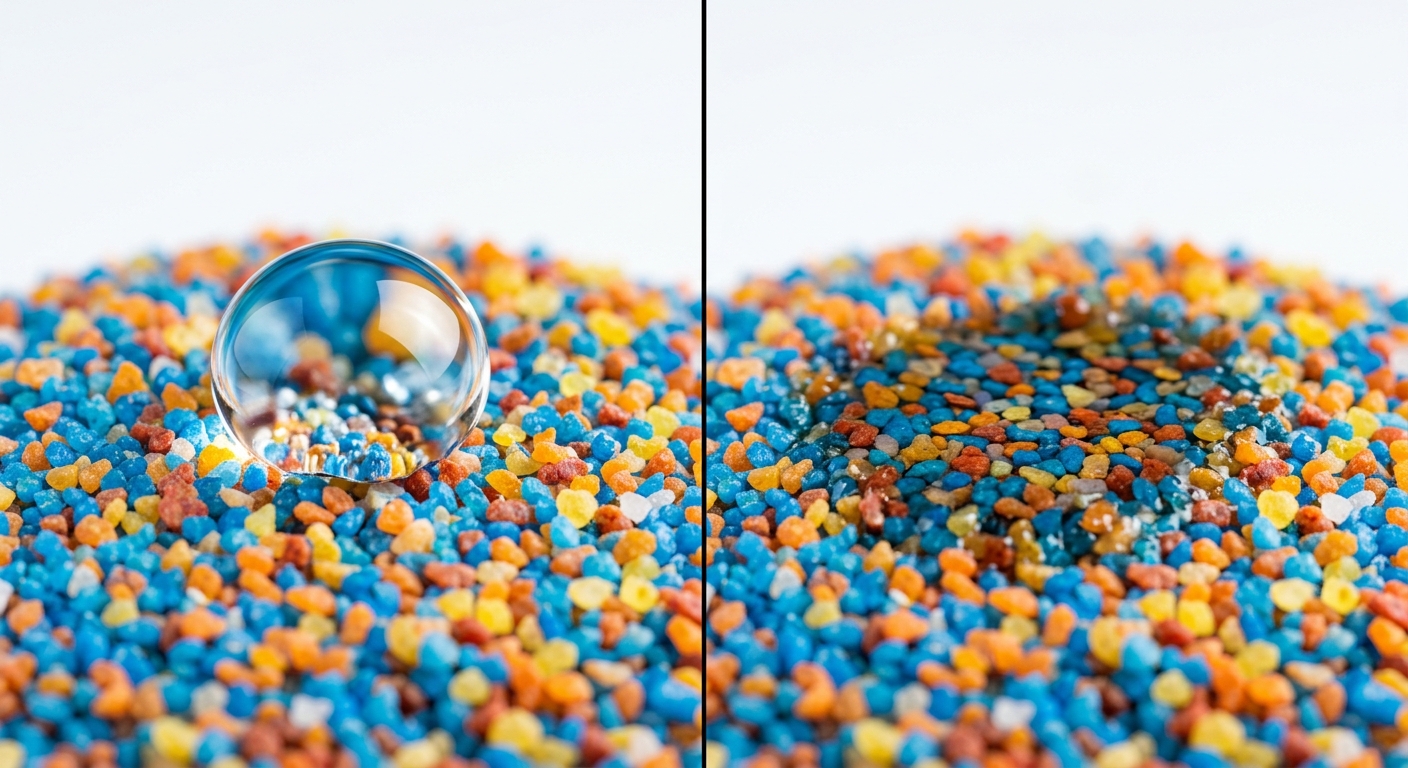
Moldable type. Water isn’t how you use it. Getting it wet can change how it clumps and feels, and it may turn sticky or heavy. Follow the maker’s care instructions and let it dry fully before playing again. Fixing and preventing wet kinetic sand covers recovery.
IBIZA’s Magic Sand is a moldable sensory sand. We don’t describe it as water-repellent or intended for underwater use, so the demo below is for water-repellent sand only.
A 3-step pour demo for water-repellent sand
Amounts are general guidance; follow the pack instructions if they differ.
- Set up the water. Fill a clear glass or jar with about 10 cm (4 in) of clean water, deep enough to cover a small mound completely.
- Pour the sand. Slowly pour two to three tablespoons of sand from just above the surface. Pour, don’t stir.
- Watch and lift. The sand sinks as a silvery clump. Nudge it with a spoon and it moves as one mass, holding a mound or blob shape. Scoop it out and it comes up dry.
Drying and reuse: Pat off any surface water, spread the sand on a tray to air-dry, and store it in a closed container. Keep soap, oil and dirty water out, since residue can interfere with the repellency. To understand why this works, see this hydrophobic sand science project.
What is magic sand made of?
Every version follows the same pattern: a fine granular base, either sand or glass beads, plus a coating or binder that decides how it behaves. A water-shedding coating gives you water-repellent sand. A binder that lets grains slide and cling gives you moldable sand.
Our moldable Magic Sand is glass-bead based, with a silicone-type binder. It is non-toxic, has no smell and doesn’t stick to hands, and it is certified to China 3C and tested to European EN 71 and American ASTM standards. Which EN 71 parts, which ASTM F963 edition and which lab apply are set out in the test report for each product, so ask us for the report for the item you plan to buy. For the wider breakdown, see what magic sand and kinetic sand contain. The two aren’t identical products; see magic sand vs kinetic sand.
Can you make your own magic water sand?
Hobbyists do make water-repellent and moldable sand at home. Homemade versions usually don’t match manufactured sand in feel, consistency or durability, so results vary from batch to batch. For methods and materials, see how to make kinetic and hydrophobic magic sand.
Which type do you need?
- Watching sand stay dry underwater: you want water-repellent sand and the pour demo above.
- Hands-on molding and play: you want moldable sand. See the Magic Sand product overview.
- Kits with molds and tools: the Magic Sand kit guide explains what comes in a set.
- A classroom or preschool station: see designing a sensory sand station.
- A water-drawing board: that’s a separate product category, and not something we make.
Buying in volume
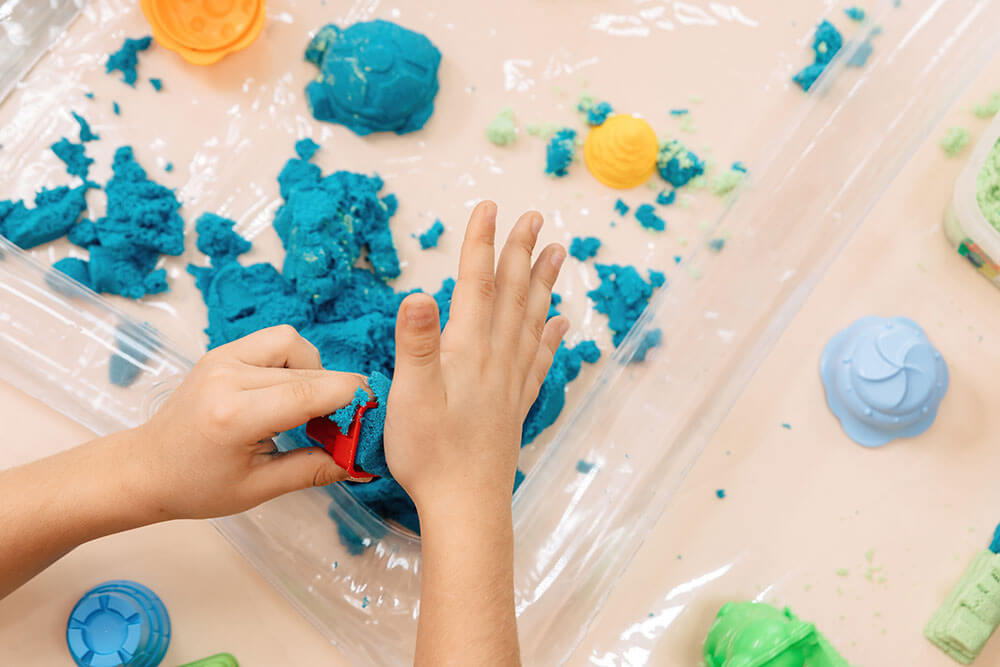
If you’re a toy maker, distributor, reseller or program buyer, we manufacture moldable Magic Sand for wholesale and private-label orders. Options include multiple colors, custom colors on request, and packaging in bulk, bags, boxes or jars, along with OEM/ODM customization. See our bulk magic sand range or the OEM/ODM options. To discuss quantities and specifications, contact us for a quote.
Frequently asked questions
-
What happens if magic sand gets wet?
It depends on the type. Water-repellent sand sheds water and comes out dry. Moldable sand can change in texture and clumping when wet, so follow the maker's care instructions and let it dry completely before reuse. Don't assume a moldable product is designed for water.
-
What is magic sand made of?
Most magic sand is a fine base, either sand or glass beads, plus a coating or binder. The coating determines whether it repels water or holds a shape. Our moldable Magic Sand is glass-bead based with a silicone-type binder.
-
Do you add water to magic sand?
No. Moldable magic sand is used dry, and adding water can change its feel. Water-repellent sand is poured into water for demonstrations, not mixed with it to make it work. In both cases, water isn't an ingredient you add to prepare the sand for use.
-
Is magic sand the same as kinetic sand?
They're similar but not identical. Both are moldable sensory sands, but "kinetic sand" is often a specific retail brand, and formulations differ between makers. "Magic sand" can also refer to water-repellent sand. Check the product description to see which behavior you're getting.
-
Is magic sand safe for kids?
Our moldable Magic Sand is non-toxic and tested to European EN 71 and American ASTM standards. EN 71 has several parts and ASTM F963 is the main US toy safety specification, so check which ones a given product's report covers. Sand isn't food, and young children should be supervised.
-
What if a child swallows magic sand, and how do I dispose of it?
Sand isn't food. If a child swallows some, remove any remaining sand from the mouth, offer water, and contact a doctor or your local poison control center for advice, especially if there's coughing or discomfort. To dispose of used sand, seal it in a bag and put it in household trash. Don't rinse it down a drain, where it can clog pipes.