

Traditional colored-sand art needs glue. Layered bottle art and moldable magic sand don’t. In magic sand art vs alternatives, permanence decides: do you want a fixed keepsake or something you can reshape? Choose glue for permanence and moldable sand for reuse.
The Quick Answer: Which Sand Art Methods Need Glue?
| Method | Needs glue? | Permanence | Mess | Reusable? | Best for |
|---|---|---|---|---|---|
| Colored craft sand + glue | Yes | Permanent | High | No | Framed pieces, keepsakes |
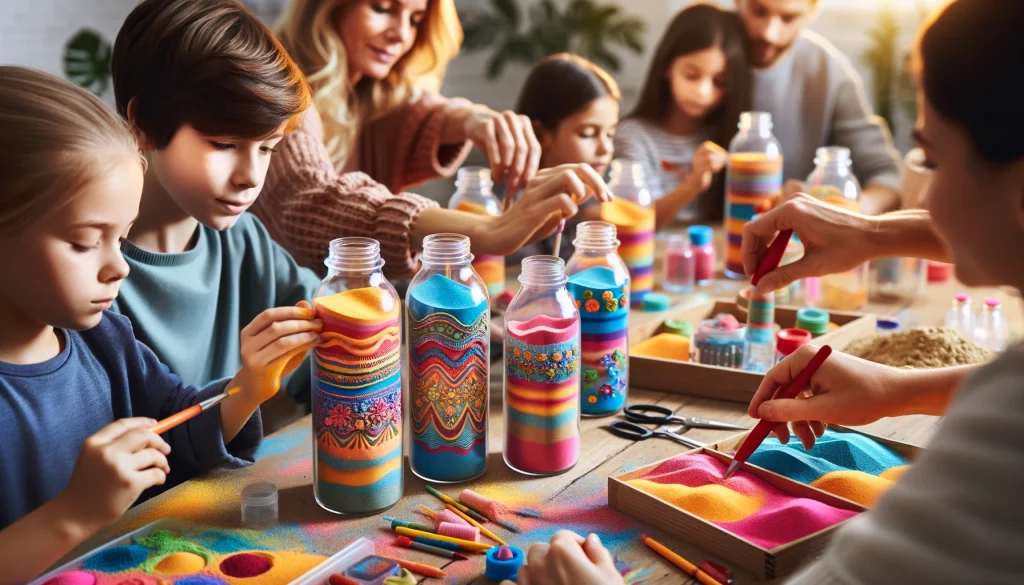
| Layered sand in bottles | No | Fixed once filled | Medium | No | Parties, gifts |
| Pre-printed sticky sand boards | Built-in adhesive | Permanent | Low–medium | No | Groups, quick projects |
| Moldable magic sand | No | Temporary | Low | Yes | Hands-on, reworkable creations |
What Glue to Use for Sand Art?
For most surfaces, use white PVA school glue or a decoupage medium. Choose tacky craft glue for heavier or coarser sand. For fine detail, use a glue pen or a double-sided sticky sheet, which give sharper lines than a brush.
Best glue by surface
- Paper and cardstock: thinned PVA or a glue pen. Thick, watery glue warps thin paper.
- Wood: PVA or decoupage medium. Wood is porous and grips the glue well.
- Glass: decoupage medium or tacky glue. Both adhere better to a smooth, non-porous surface than thin school glue.
- Canvas: PVA or tacky glue, applied in small sections so it doesn’t soak through.
- Ceramic or terracotta: tacky glue or decoupage medium. Seal the piece afterward if it will be handled.
Glue to avoid or use carefully
- Hot glue: it sets in lumps and can’t hold fine sand detail.
- Super glue: it gives off fumes and isn’t a good choice for children.
- Very watery glue: it runs, warps paper and blurs edges.
Application tips
Spread a thin, even coat over one small section at a time. Sprinkle the sand, tip off the excess, and let the piece dry flat. A thin coat of PVA is usually dry to the touch within an hour, but thick layers take longer, so leave a finished piece overnight before handling or sealing it. Repeat with the next color and seal at the end if you want extra protection. For young children, pick a glue the manufacturer labels non-toxic and supervise throughout.
Why Glue Isn’t the Answer for Moldable Magic Sand Art
Moldable magic sand is built so the grains cling to each other, not to a surface. Gluing it defeats the point, because its main appeal is that you can shape, flatten and reshape it. (It is also a different product from hydrophobic “magic sand,” the water-repellent science sand that stays dry underwater.)
Our sand is made from glass beads bound with a high-temperature-resistant organic silica gel, a silicone-type material. It is designed to hold its shape without sticking to hands or drying out. A grain coated like this may not bond reliably to water-based glue. That is a general observation about coated sand, not a tested result, so adhesion can vary by product. If you want to try it, test a small patch first.
To keep a magic sand creation on display without glue, use one of these:
- a shallow tray
- a shadow box
- a sealed container
- a photograph of the finished piece
Magic Sand Art vs the Alternatives: Side-by-Side
Traditional colored sand and glue. You get a permanent piece that works on many surfaces at low cost. Fine sand gives crisper edges than coarse sand, and each color needs its own glue-and-dry cycle. The trade-offs are mess, waiting time between colors, and a design you can’t rework once it’s set.
Layered sand in bottles or jars. There’s no glue, and the result looks good on a shelf or as a party favor. Fill to the brim and cap it tightly, because any air gap lets the layers shift and blur when the bottle is tipped. The design is fixed once poured, and fine detail is limited.
Pre-printed sticky sand boards. The adhesive is built in, prep is minimal, and they suit groups. You peel one section at a time and fill it with one color, which keeps colors apart. The designs are fixed, so there’s less creative freedom.
Moldable magic sand. There’s no glue, it’s reusable, and it’s tactile. One tub serves session after session, so it isn’t used up the way glued sand is. The catch is that it isn’t a permanent framed piece unless you display it in a case or photograph it. It also works for dozens of kinetic sand activities for creative learning beyond art.
How to Choose: A Quick Decision Guide
- Want a keepsake to frame or gift? Choose glue-based sand art.
- Running a party or group activity? Choose layered bottles or sticky boards.
- Want reusable, hands-on, reworkable play? Choose moldable magic sand. Because nothing needs to dry and nothing is permanent, it also suits open-ended sensory play, and occupational therapists use magic sand in sensory sessions.
- Want a ready-made set with molds and tools? In magic sand kit vs alternatives such as loose sand or DIY mixes, the kit wins on convenience and loose sand on quantity.
- Buying sand for play rather than art? Indoor play sand vs alternatives is a different decision, driven by mess and volume.
- Choosing a single color? Blue suits ocean and sky scenes, and the pros and limits of blue magic sand apply to most strong colors.
Where to Get Magic Sand for Art Projects
Moldable magic sand for art projects comes in several colors and works for no-glue sculpting, layering in sealed jars and tabletop scenes.
For business buyers, IBIZA Sand makes moldable magic sand in multiple colors, with OEM/ODM customization for distributors and toy retailers. Bulk and private-label orders are quoted through our contact page.
FAQ
-
What glue should I use for sand art?
White PVA school glue or decoupage medium works on most surfaces. Use tacky craft glue for heavier sand, and a glue pen or double-sided sticky sheet for fine detail. Apply thin, even coats in small sections, tip off the excess, and dry the piece flat.
-
What is the best glue for sand art on wood, glass or paper?
Use PVA or decoupage medium on wood, which is porous and grips well. Use decoupage medium or tacky glue on glass, where thin school glue may not hold. Use thinned PVA or a glue pen on paper, since watery glue warps it.
-
Can you make sand art without glue?
Yes. Layering colored sand in a bottle or jar needs no adhesive, and neither does moldable magic sand, which you shape by hand or with molds. Pre-printed sticky boards also skip the glue step because the adhesive is already on the board.
-
Does magic sand stick to glue?
There is no reliable general answer, because results vary by product. Moldable sand is designed so its grains cling to each other, and it may not bond well to water-based glue. Test a small patch first, and consider a tray or shadow box instead.
-
Is sand art safe for kids?
Choose glue labeled non-toxic by its manufacturer, avoid hot glue and super glue for children, and supervise young ones, especially around loose sand and small pieces. Follow the age guidance on each product's packaging; most sand craft products are not meant for children under 3.
-
Is magic sand the same as kinetic sand?
They are similar moldable sensory sands, and the names are often used interchangeably, though Kinetic Sand is a brand name. Formulas and feel can differ by brand: the main differences in magic sand vs kinetic sand are the grain and the binder.