

A 4×4 ft sandbox filled 6 in deep needs about 16 fifty-pound bags. Buying play sand bulk (washed, screened sand by the pallet, the cubic yard, or the super sack) costs less per pound, but delivery fees mean bags stay cheaper for small boxes. At the example prices below, loose delivered sand starts to win at around 25 bags, roughly a 5×5 ft box at 6 in.
What is play sand bulk?
Play sand is fine, washed, screened sand made for sandboxes. “Bulk” means one of three formats:
- pallets of 50 lb bags
- loose sand sold by the yard or ton and delivered
- bulk bags (super sacks)
Play sand isn’t builder’s, mason, or sharp sand, which are graded for construction. Ask for “washed play sand” by name, and check that:
- the bag or delivery ticket labels it as washed and screened sand for play
- the supplier can show a toy-safety test report, such as ASTM F963 or an equivalent standard, for that exact product, plus its SDS
- the label or test sheet states the sand is free of asbestos, including tremolite
Most natural sand is quartz, a crystalline silica, so keep dust down: pour bags outdoors or low to the ground, and don’t dump dry sand in a closed room.
Coverage and ton math
Assumption: dry sand at about 100 lb per cubic foot, so a 50 lb bag is roughly 0.5 cu ft. Confirm with your supplier.
| Fill depth | Coverage per 50 lb bag |
|---|---|
| 1 inch | ~6 sq ft |
| 2 inches | ~3 sq ft |
| 4 inches | ~1.5 sq ft |
| 6 inches | ~1 sq ft |
Sandboxes need 4–6 inches, so one bag covers far less than most people expect. A 4×4 ft box at 6 inches holds 16 sq ft × 0.5 ft = 8 cu ft, about 800 lb or 16 bags.
One ton is 40 bags, or about 20 cu ft. Loose sand is priced per cubic yard (27 cu ft, about 2,700 lb or 1.35 tons), so convert before comparing quotes.
Prices vary by region. Rough US ranges to use as a starting point until you get local quotes: $5–$9 per 50 lb bag, $30–$60 per yard of loose washed sand, and $50–$150 per delivery, often with a minimum order. At $6 a bag, bagged sand works out to $12 per cu ft, or about $324 per cubic yard.
Worked example (at $6 a bag, $45 a yard and $100 delivery):
- 4×4 ft box, 6 in deep: 8 cu ft (about 0.3 yd). 16 bags × $6 = $96, versus a one-yard delivery minimum at $45 + $100 = $145. Bags win for small boxes.
- Break-even: $145 buys about 24 bags, so from roughly 25 bags (12.5 cu ft, a 5×5 ft box at 6 in) the delivered yard costs less.
- 8×8 ft box, 6 in deep: 64 sq ft × 0.5 ft = 32 cu ft, about 1.19 cu yd or 64 bags ($384). Add about 10% for settling and spills and you need roughly 1.3 yd; many yards sell in half-yard steps, so order 1.5 yd for about $168 ($67.50 + $100). With the same 10% margin in bags (about 70 bags), the bag option rises to about $420. Loose wins clearly.
Where to buy play sand in bulk
For larger quantities, the usual order of value is:
- Local landscape or aggregate yards (loose, delivered)
- Garden centers with “bulk & bag” service
- Big-box 50 lb bags
- Online retailers such as Amazon
Many online listings are smaller bags, which suit small or colored batches. Shipping weight erodes the value for a full sandbox. For a vetting checklist, see how to choose the best play sand supplier.
When you call a yard, give the quantity in cubic yards and ask for washed play sand. Ask about delivery minimums, truck access, and whether they charge by the yard or the ton.
When bulk play sand isn’t the right product
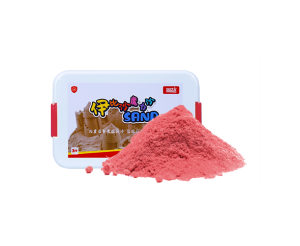
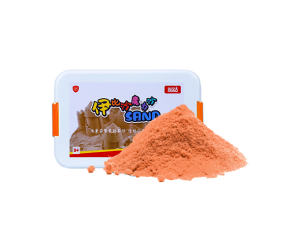
Natural quartz play sand doesn’t hold a molded shape for long, and it is messy indoors. For moldable, indoor-friendly sensory sand sold to distributors or toy retailers, bulk moldable Magic Sand from IBIZA is made from glass beads. It comes in multiple colors and packaging options (bulk, bags, boxes, jars), with OEM customization available. It is a different product, not a cheaper substitute. For how the materials differ, see glass beads vs silica sand.
Sourcing moldable sand for resale instead? Contact IBIZA with your packaging and color requirements to request a quote.
FAQ
-
Where is the cheapest place to get play sand?
For larger volumes, local landscape or aggregate yards usually have the lowest cost per pound, because loose sand skips bagging and retail markup. Garden centers with bulk-and-bag service come next, then big-box bags. For small amounts, delivery fees and minimums can flip the ranking.
-
How much is 1 ton of play sand?
One ton equals 40 fifty-pound bags, or about 20 cu ft (about 0.74 cu yd). Price depends on region and delivery. Loose delivered sand is typically far cheaper per pound than bagged once the order is large enough to absorb the delivery fee. Convert every quote to the same unit, per ton or per yard, before comparing.
-
What can I use instead of play sand?
Outdoors, other fine washed sands work, as do non-sand fillers such as wood chips. Indoors, moldable sensory sand is an option; see indoor play sand in bulk or this overview of sensory play sand.
-
How much area does a 50 lb bag of play sand cover?
About 6 sq ft at 1 inch deep, 3 sq ft at 2 inches, and 1.5 sq ft at 4 inches, assuming roughly 0.5 cu ft per bag. Most sandboxes need 4–6 inches, so one bag covers only about 1–1.5 sq ft. Divide your box area by the coverage per bag to get the bag count.